Model Testimonials
Most model marks either look like logos or look like people. We wanted neither. These avatars are a small visual language for models: abstract enough to stay honest, structured enough that you can read who made it, how dense the era is, and whether the weights are open, without inventing a face.
Why they look like this
Every mark is an N×N lattice of square cells. Five pieces of model metadata map onto five visual channels. Only the model ID seeds which cells get filled. That fingerprint is unique, but the style is shared. The point is recognition without costume.
Company → hue Lab identity is locked to a fixed HSL hue so marks stay separable at small sizes.
Generation → density Newer eras get finer grids. Early models stay sparse on purpose.
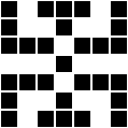 Claude Opus 4.5
Openness → fill Closed weights fill solid. Open weights stay outlined, hollow on purpose.
Line → lightness Flagship is darkest. Fast and community lines go lighter.
Modality → symmetry Multimodal marks mirror on both axes. Text-only mirrors left to right.
Hue is the lab
Brand colors drift. We don’t scrape logos. Each company gets a fixed hue chosen for legibility and mutual separation when many marks share a canvas.
-
 Anthropic 18°
-
 OpenAI 168°
-
 Google 262°
-
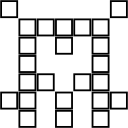 Meta 214°
-
 Mistral 28°
-
 xAI 210°
-
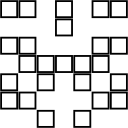 DeepSeek 152°
-
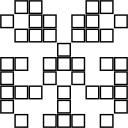 Alibaba 38°
-
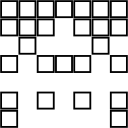 Moonshot 318°
-
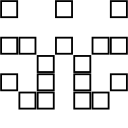 Zhipu 188°
-
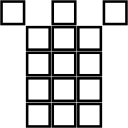 01.AI 275°
-
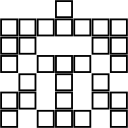 MiniMax 350°
Density is the era
Start sparse. Level 1 is 3×3; today’s frontier lands on 9×9. Level 5 (11×11) is reserved so marks have somewhere left to grow. Odd grids keep a center column after mirroring, useful when the mark is tiny.
-
 L1 3×3
-
 L2 5×5
-
L3 7×7
-
 L4 9×9
- L5 reserved
Fill is openness
Closed models read as present and opaque. Open-weight models keep the same hue but drop to outline only, so you can see through them.
-
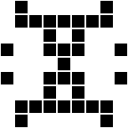 Closed · solid
-
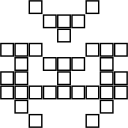 Open · outline
Line, modality, fingerprint
Product line shifts lightness: flagship darkest, community lightest. Modality sets symmetry: multimodal gets four-fold mirroring; text-only mirrors left to right. The model ID alone seeds which cells fill, so two models with the same style still get different silhouettes.
Share what working with them is like
We are looking for people who have used these models in real work, not demos. Click any avatar below and tell us what you used it for, whether it behaved the way you expected, and one thing someone should know before working with it. Those notes help shape future plot. stories about how these systems actually land in practice.
If we missed a model, got a release wrong, or you have suggestions for this catalog, say so in a note or write us. The roster is meant to grow with the field, and with the people watching it closely.
The catalog
Loading avatars…